
Porcelain vs Composite Veneers
Porcelain veneers are custom-made ceramic coverings; composite veneers are resin shaped directly on teeth, as the Australian Dental Association explains. Compare preparation, repair needs and alternatives with your dentist before choosing.
On this page
How should you compare porcelain and composite veneers?
Compare porcelain and composite veneers by the change you want, the tooth preparation proposed and the care you are prepared to maintain. The Australian Dental Association describes porcelain as a custom-made ceramic covering and composite as resin shaped on your tooth. Neither choice removes the need to assess your teeth and discuss future repair or replacement.Sources: [1, 2]
- Cosmetic dentistry in West Perth
Explore the wider set of cosmetic decisions before narrowing your choice.
You may like your teeth overall but notice one uneven edge, a gap or a colour difference. Start by naming that concern in your own words. A useful comparison asks how much treatment your concern actually needs, rather than how many veneers appear in someone else's treatment plan.
Healthdirect describes veneers as coverings for the front surface of teeth. They can change appearance, but do not correct decay or the way your teeth bite together. A material comparison is therefore only one part of deciding whether veneers make sense for you.Sources: [1]
For your discussion, write down what you would like to change and what you want to keep. Be specific about shape and colour. Ask the dentist to separate changes that can be considered from expectations that cannot be met. You can take time to understand an elective proposal before agreeing to it.
Who might consider veneers, and who needs other care first?
Veneers may be considered for discolouration, small chips, gaps or tooth shape, as Healthdirect explains. Your dentist must also check dental health and your bite. The American Dental Association advises treating decay or gum disease first; Healthdirect notes that clenching and grinding can make veneers unsuitable. An attractive material cannot resolve those underlying problems.Sources: [1, 4]
Your assessment should connect the visible concern with the condition of the tooth. Ask whether a small area needs repair or whether a covering over its front is being proposed. Ask which findings explain that recommendation. Looking at a tooth in a mirror does not give you the same information as a dental examination.Sources: [1, 4]
Healthdirect explains that veneers do not straighten teeth or correct a bite problem. If alignment is the main concern, ask whether an orthodontic assessment would answer the question more directly. If a tooth is extensively damaged, ask whether a different restoration is needed.Sources: [1]
Tell the dentist about clenching or grinding and any previous restorations. When an examination identifies a problem to treat first, ask what must happen before the cosmetic decision can be revisited. Keep the health treatment and the optional appearance change as separate items in the discussion.Sources: [1, 4]
- Our dentist in West Perth
Read Dr Michael Wu's qualifications, registration and clinical review details.
What are the meaningful differences between the two materials?
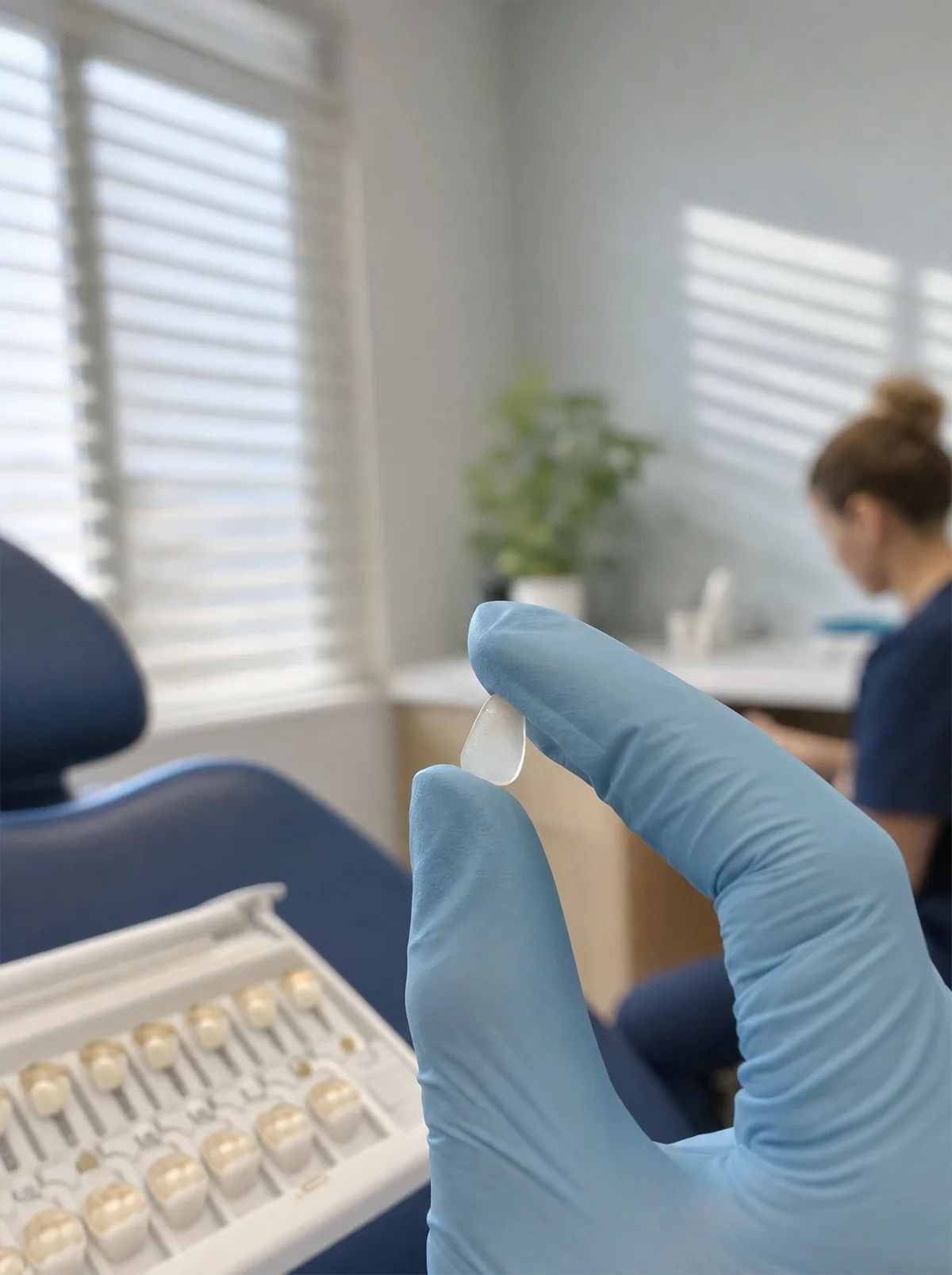
Porcelain is fabricated to fit the tooth; composite is built directly on it, as the Australian Dental Association explains. The American Dental Association notes that composite can be easier to repair but is less resistant to staining and wear. Your preparation needs still require individual assessment.Sources: [2, 4]
Use this table to compare two proposed plans for your own teeth. Ask the dentist to explain any difference in the number of teeth included, the extent of preparation and the follow-up being offered. A comparison is hard to interpret when those details change along with the material.
Enamel removal for a veneer is irreversible, as the American Dental Association explains. Easier repair does not mean every damaged composite veneer can be repaired. Ask what preparation is proposed, what would make replacement necessary and how those possibilities affect your decision today.Sources: [4]
| Porcelain veneer | Composite veneer | |
|---|---|---|
| Material and placementSources: [1, 2] | Custom ceramic shell fitted to the front of the tooth. | Tooth-coloured resin shaped directly on the front. |
| Making the veneerSources: [2] | Commonly made in a laboratory from an impression or scan. | Built and shaped by the dentist in the chair. |
| Natural toothSources: [1, 4] | Ask how much preparation is proposed for each tooth. | May need less preparation; do not assume none. |
| Wear and repairSources: [1, 4] | Can chip or detach; ask what repair or replacement would involve. | Can be easier to repair, but is less resistant to staining and wear. |
| Colour laterSources: [3] | Whitening will not lighten the veneer. | Whitening will not lighten the resin. |
| Initial and future fees | No obligation consultation. Ask for an individual treatment plan and written estimate before deciding. | No obligation consultation. Ask for an individual treatment plan and written estimate before deciding. |
- Porcelain veneers
Read the related treatment decision guide.
- Composite veneers
Explore questions about directly applied resin.
What should happen before you agree to preparation and fitting?
Agree on the teeth, material, preparation and fitting plan before treatment. Healthdirect and the Australian Dental Association describe assessment, preparation and placement as parts of veneer care, with review afterwards. Porcelain fabrication and direct composite placement take different paths. Ask your dentist to explain each milestone, including when you can discuss the intended shape and colour before treatment proceeds.Sources: [1, 2]
Before consent
Understand the proposal
Ask which teeth are included, why veneers are recommended and which alternatives remain reasonable. Request an explanation of any tooth trimming and its implications before agreeing.Sources: [1, 4]
When choosing the material
Clarify fabrication
For porcelain, discuss the impression or scan and making the shell. For composite, discuss building and shaping the resin on the tooth. Your dentist will explain the proposed materials, methods and any temporary arrangements in your individual plan.Sources: [1, 2]
At placement
Discuss fitting
Ask how fit, shape and colour will be checked and how you should raise a concern. Do not assume an advertised material name describes every detail of the proposed treatment.Sources: [4]
Before leaving
Arrange review
Confirm the follow-up plan and who to contact about the bite or a damaged veneer. Your dentist will discuss the appointment stages, timing and follow-up for your individual care.Sources: [1, 4]
How can veneer treatment feel, and what needs an early check?
Veneer preparation may involve local anaesthetic, and teeth can feel different or sensitive afterwards, according to Healthdirect. Ask how discomfort will be managed. The American Dental Association advises reporting a bite that feels wrong rather than relying on a fixed settling-in period.Sources: [1, 4]
Before treatment, explain what worries you about the appointment. Ask how you can signal that you need a pause, what sensations to expect and what comfort measures are proposed. This guide cannot confirm which methods a particular clinic offers or predict how treatment will feel for you.
After fitting, separate a new sensation from a problem you want checked. The American Dental Association advises telling your dentist when the bite does not feel right. Ask for specific instructions about sensitivity and who to contact if the veneer cracks, loosens or comes off.Sources: [4, 1]
Recovery is not the same as completing a course of treatment. Make sure you understand whether another visit is planned, what it is for and whether any decision remains open. Ask your treating dentist about eating, work or other commitments instead of assuming someone else's timetable applies.
What risks and ongoing care belong in your decision?
Both veneer materials need ongoing care because the tooth beneath can still decay, as the Australian Dental Association explains. Healthdirect lists cracking, detachment, sensitivity and a changing colour match among the risks. Discuss what those problems would mean for you, as well as daily cleaning and planned dental review.Sources: [2, 1]
The Australian Dental Association advises brushing with fluoride toothpaste twice a day and cleaning between teeth daily. Ask the dentist to show you how to clean around your particular restorations. A veneer changes the tooth's appearance; it does not make the natural tooth immune to dental disease.Sources: [2]
Healthdirect notes that gum recession can expose veneer edges and natural teeth can change colour differently from veneers. Raise a new colour or edge concern at review. The Australian Dental Association explains that whitening does not lighten the veneer itself.Sources: [1, 3]
The American Dental Association advises against using veneers to bite hard objects or chew nails. If you grind or clench, discuss that before treatment and again if your situation changes. A repeated chip deserves a discussion about the cause, not simply an assumption that another repair settles the whole issue.Sources: [4]
Future maintenance belongs in the original decision. Ask who will assess damage, how records of the material and treatment are kept, and what information you would need if another dentist later provides care. No lifespan or replacement interval is promised here.
Could a smaller treatment or no elective treatment meet your goal?
A limited resin repair, whitening, orthodontic assessment or a crown may address your concern; Healthdirect lists these alternatives to veneers. Keeping your teeth unchanged is also an elective choice. The useful comparison is the problem addressed and the amount of treatment proposed.Sources: [1]
Ask for the options to be explained against your original concern. If you mainly want a different colour, discuss colour first. If a single edge bothers you, ask about that edge. You do not need to accept a larger cosmetic scope simply because several options are available.
| Concern to discuss | Important limit or question | Clinic fee | |
|---|---|---|---|
| Limited resin repairSources: [1] | A small section of a tooth. | Can a local repair meet the goal without covering the whole front? | Discuss your individual plan with Dr Michael Wu at a no obligation consultation |
| WhiteningSources: [3] | Natural tooth colour. | Does not change the colour of existing fillings, crowns or veneers. | Discuss your individual plan with Dr Michael Wu at a no obligation consultation |
| Orthodontic assessmentSources: [1] | Tooth position or the bite. | Would moving teeth address the concern rather than masking their appearance? | Discuss your individual plan with Dr Michael Wu at a no obligation consultation |
| A crownSources: [2, 1] | A tooth that needs a different restoration. | Why is covering more of the tooth appropriate in this case? | Discuss your individual plan with Dr Michael Wu at a no obligation consultation |
| No elective changeSources: [1, 4] | You prefer to keep the current appearance. | Necessary dental care still needs its own plan. | Not a treatment quote |
- Whitening sensitivity questions
Consider the risks when natural tooth colour is your main concern.
How can you compare quotes without comparing unlike plans?
Compare veneer quotes by their contents, not just the total. Ask which teeth, material, preparation, fitting and reviews are included, and what could cost extra later. No obligation consultation. Ask for an individual treatment plan and written estimate before deciding. HBF, nib, GMHBA, AIA, Frank, Peoplecare and RBHS via smile.com.au; HICAPS on-the-spot claims and DVA. Check your cover and any out-of-pocket amount with your fund. Afterpay, Zip, Humm and Supercare (super release) are available, subject to eligibility and provider terms. A written scope makes the comparison easier to discuss.
Request separate entries for the assessment, any proposed imaging, treatment of existing dental problems, veneers themselves and follow-up. For porcelain, ask how fabrication is represented. For composite, ask what finishing or later review is included. Your dentist will discuss the appointment stages, timing and follow-up for your individual care.
Ask how the quote would change if you choose fewer teeth, a limited repair or no cosmetic work. Also ask what happens if the plan changes after assessment. Keep a copy of the scope you agree to, including which choices you have deferred.
Future repair and replacement need a separate discussion from the initial price. Ask whether the quote says anything about those costs or conditions.
- Dental fees and payment questions
Check payment options and what to ask about your written estimate.
What can the available evidence not tell you?
Healthdirect, the Australian Dental Association and the American Dental Association describe veneer materials and recognised risks; their general guidance cannot choose a material for your mouth. It does not establish your preparation needs, final appearance, comfort, service life or total cost. Those uncertainties belong in a dental assessment and an informed discussion before you agree to treatment.Sources: [1, 2, 4]
A material label is not a forecast of your experience. This guide contains no result photographs, patient stories or numerical lifespan claim. When comparing advice, ask whether a statement describes a general property of a material or a finding from your own examination.
Ask the dentist what would change their recommendation. For example, would a finding about the bite, gums or an existing restoration alter the proposed scope? Record the reason for the recommendation alongside the material name so you can review the decision later.Sources: [1, 4]
What else should you ask before making your choice?
Before choosing veneers, ask how unresolved preferences will be handled, whether the proposed scope can be narrowed and what records you will receive. You should leave the discussion understanding the reason for each planned tooth, the alternatives considered and the next decision you need to make.
Can you discuss one tooth without agreeing to several? Yes: ask for the proposal to identify each tooth and explain its role in the plan. The Australian Dental Association describes veneers for one or more teeth, so the number should be part of the discussion rather than an unstated assumption.Sources: [2]
What if you dislike the proposed colour or shape? Say so before agreeing to the plan. Ask how preferences will be discussed and recorded, and what can still be changed at each stage. A clinic remake, refund or satisfaction policy is not established by this guide.
Should you bring a list of questions? Bring the concerns you most want answered, including anything you did not understand in a previous explanation. Your next step is a discussion about suitability and scope, with the option to consider the information before deciding.
- Contact Simply Smiles West Perth
Simply Smiles West Perth offers porcelain and composite veneers, teeth whitening, Invisalign clear aligners, smile makeovers, dental crowns, single-tooth implants, implant bridges, full-arch implants and emergency dental care.
- Cosmetic dentistry in West Perth
Return to the overview of cosmetic decisions.
- Dental advice articles
Browse the four patient guides.
Sources
Numbers in brackets point to these public sources.
- Healthdirect Australia: Veneers. Reviewed February 2025. Accessed 6 October 2026.
- Australian Dental Association: Crowns, bridges and veneers. Accessed 6 October 2026.
- Australian Dental Association: Teeth whitening. Accessed 6 October 2026.
- American Dental Association / MouthHealthy: Veneers. Accessed 6 October 2026.
Clinical review
This guide was reviewed by the dentist named below. About our dentist
- Reviewing dentist
- Dr Michael Wu
- Qualifications
- Doctor of Dental Medicine (UWA)
- AHPRA registration
- DEN0002758483
- Review date
- 7 October 2026
Source access dates record when the research was checked. They are not clinical review dates.