
Porcelain Veneers Perth
Porcelain veneers are thin, custom-made coverings bonded to the front of teeth, as Healthdirect Australia explains. Preparation may remove enamel and needs individual assessment. Simply Smiles West Perth offers porcelain veneers; compare the alternatives and future care before deciding.
On this page
What should you know if you are considering porcelain veneers?
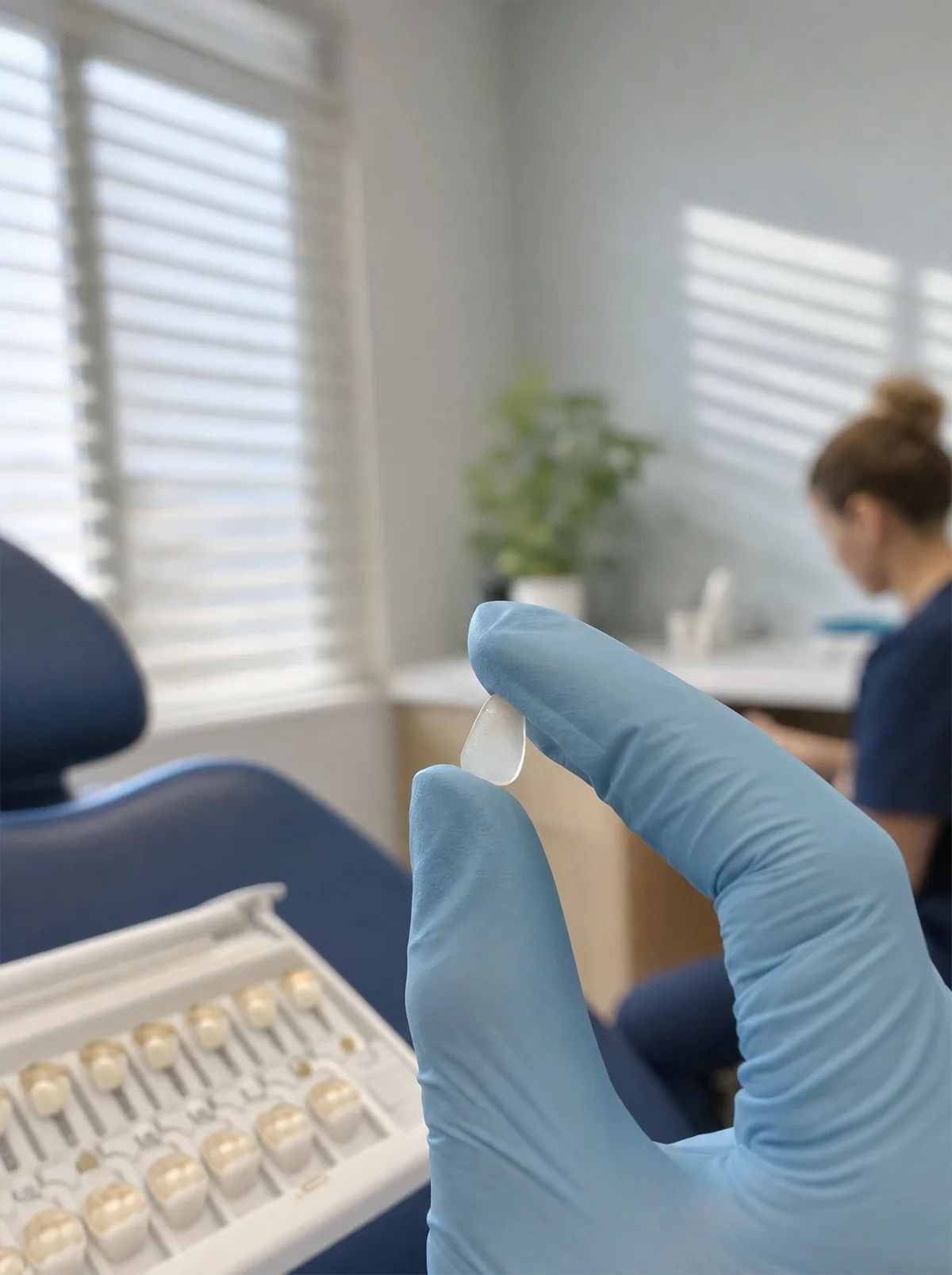
Porcelain veneers are custom-made coverings bonded to the front of teeth, as Healthdirect Australia explains. Before choosing a covering, discuss your dental health, tooth preparation and the alternatives for your particular concern.Sources: [1]
- Cosmetic dentistry in West Perth
Compare the wider choices before narrowing your decision.
Start by pointing out the tooth or area that bothers you. Explain whether your concern is colour, shape or the space beside it, and what you would prefer to keep. A veneer discussion is more useful when the proposed change is clear than when it starts with an assumed number of teeth to treat.
Healthdirect Australia and Australian Dental Association: Porcelain veneers are custom-made coverings. The preparation, fit and future care matter as much as the material name. General guidance cannot tell you whether your tooth needs a veneer, a small repair or a different approach.Sources: [1, 5]
| Detail | Clinic information |
|---|---|
| Porcelain veneer services | Offered at Simply Smiles West Perth; suitability assessed individually |
| Assessment and treatment timing | Discuss your individual plan with Dr Michael Wu at a no obligation consultation |
How will a dentist decide whether porcelain veneers suit you?
Healthdirect Australia and American Dental Association: A dentist assesses tooth health, gums, bite and the change you want before recommending veneers. Grinding, clenching and gum disease can affect suitability. Veneers may change the appearance of a front surface, but they do not treat decay or a bite problem. Ask what needs attention first and why this option is proposed.Sources: [1, 7]
Healthdirect Australia: A veneer may be considered for an assessed concern with tooth colour, shape, a chipped area or spacing. Seeing the same concern in a photograph does not show whether your tooth is suitable. Ask your dentist to explain what they found and which part of the proposed treatment addresses it.Sources: [1]
Healthdirect Australia and American Dental Association: Tell your dentist if you clench or grind, if your teeth feel sensitive, or if you have had problems with earlier dental work. Grinding and clenching may make veneers a poor choice; existing decay or gum disease needs treatment before placing veneers.Sources: [1, 7]
Healthdirect Australia: If the concern is tooth position, ask about orthodontic assessment. If only a small section needs repair, ask whether limited resin treatment is enough. You may also choose to leave an elective appearance concern unchanged after discussing your dental health.Sources: [1]

What could porcelain veneers mean for your natural enamel?
Healthdirect Australia and American Dental Association: Porcelain veneer preparation may remove enamel, and that removal is irreversible. Enamel removal is irreversible. Ask exactly which teeth would be prepared and why before agreeing to treatment. The amount and method need individual assessment; neither a thin veneer nor an appearance-only concern establishes that preparation can be avoided.Sources: [1, 7]
A veneer that needs replacement later is not the same as undoing the original preparation. The American Dental Association explains that removal of enamel for veneers makes the treatment irreversible. This is a decision to understand before the tooth is changed, rather than a detail to discover at fitting.Sources: [7]
Healthdirect Australia and American Dental Association: Ask your dentist to distinguish what is needed for the tooth's condition from what is proposed for appearance. Request an explanation of the alternatives with less extensive treatment, and ask what continued care the prepared tooth would need. Do not assume an advertised material or label answers these questions.Sources: [1, 7]
What are the milestones in porcelain veneer treatment?
Healthdirect Australia and Australian Dental Association and American Dental Association: The usual laboratory-made process includes preparation, an impression or scan, fabrication, fit checks and bonding. In a laboratory-made process, an impression or scan records the teeth and the veneers are made separately before bonding. Confirm the proposed stages and what happens between them. Your dentist will explain the proposed materials, methods and any temporary arrangements in your individual plan.Sources: [1, 5, 7]
Healthdirect Australia and Australian Dental Association: Ask which milestones need separate appointments and whether other care is needed first. A fabrication stage is part of the overall plan, not a fixed waiting period supplied by this guide. If work or travel affects attendance, discuss that before agreeing to start.Sources: [1, 5]
Before any tooth preparation
Assessment and treatment choice
Healthdirect Australia: Identify the concern, check your teeth and bite, and discuss alternatives. Ask for the reason behind each proposed veneer and the expected limits of the change.Sources: [1]
After you understand and agree the plan
Preparation and a record of the tooth
Healthdirect Australia and American Dental Association: The dentist prepares the tooth as needed and records it with an impression or scan. Ask what enamel would be removed and what comfort measures are proposed.Sources: [1, 7]
Before the final veneer is fitted
Custom fabrication
Australian Dental Association and American Dental Association: For a laboratory-made veneer, the tooth record is used to fabricate the porcelain covering. Ask what, if anything, would cover or protect your tooth between stages; a temporary veneer may be used.Sources: [5, 7]
When the veneer is ready
Fit, shape and bonding
American Dental Association: The dentist checks the veneer on the tooth and makes any needed adjustments before bonding. Raise questions about the proposed appearance and feel while the plan can still be discussed.Sources: [7]
After placement and at advised reviews
Review and continuing care
Healthdirect Australia and American Dental Association: Tell your dentist if your bite feels wrong. Ask when the fit, symptoms and cleaning should be reviewed, and who to contact if a problem develops.Sources: [1, 7]
What might fitting veneers feel like, and what needs review?
Healthdirect Australia and American Dental Association: Tooth preparation may involve local anaesthetic, and sensitivity can occur after enamel is removed. Teeth can feel different after their shape changes, and sensitivity is a possible risk. Ask about comfort before treatment and contact your dentist if your bite feels wrong or symptoms concern you; there is no universal adjustment deadline.Sources: [1, 7]
Healthdirect Australia: Explain any previous difficult dental experience and ask how to signal that you need a pause. Confirm what will happen during preparation and fitting, including whether anaesthetic is planned. The procedure described in a public source does not confirm the clinic's comfort arrangements.Sources: [1]
Healthdirect Australia and American Dental Association: After fitting, note what you feel, where it occurs and whether it is changing. A new shape can take getting used to, but a bite that feels wrong should be reported to the dentist. Ask for individual advice about eating, daily activities and symptoms rather than waiting for a general recovery date.Sources: [1, 7]
How should you look after porcelain veneers over time?
American Dental Association and Healthdirect Australia: Brush twice daily with fluoride toothpaste and clean between your teeth every day, as the Australian Dental Association advises for restored teeth. Brush twice daily with fluoride toothpaste and clean between your teeth each day. Veneers do not prevent decay, and damage or colour changes can lead to further treatment. Ask for cleaning advice and a maintenance plan suited to your teeth.Sources: [5, 7, 1]
Australian Dental Association and American Dental Association: Keep the care of your natural teeth in the plan. Decay can still develop around or beneath a veneer, so the new covering is not a substitute for brushing or cleaning between teeth. Ask your dentist to show you any area you find difficult to clean.Sources: [5, 7]
American Dental Association and Healthdirect Australia: Avoid biting hard objects and habits such as chewing fingernails, which can damage veneers. If you grind or clench, discuss that concern with the dentist rather than assuming porcelain will withstand it. Ask whether you need advice about protection for your own activities and bite.Sources: [7, 1]
American Dental Association and Australian Dental Association: Veneers can need rebonding, repair or replacement after damage or wear. Ask what reviews would look for and how future treatment would be quoted. This guide gives no fixed lifespan; planning for continued care is part of deciding whether the initial change is worth undertaking for you.Sources: [7, 5]
Which porcelain veneer risks should you discuss and act on?
Healthdirect Australia and American Dental Association: Veneers can crack, detach or cause sensitivity; gum recession can expose their edges and neighbouring teeth may change colour. Edges can become visible if gums recede, and the veneer colour may no longer match neighbouring teeth. Understand these possibilities before treatment. Report a changed bite, damage or troublesome symptoms so a dentist can assess what has happened.Sources: [1, 7]
Healthdirect Australia and American Dental Association: Ask about the effect of your bite and any clenching or grinding on the proposed veneers. Suitability and future damage cannot be assessed from appearance alone. If a veneer chips or becomes loose, seek dental advice about the tooth and restoration rather than deciding yourself that it only needs cosmetic polishing.Sources: [1, 7]
Australian Dental Association: If colour matching worries you, discuss the shade plan before placement and ask how a later mismatch would be assessed. A colour concern does not by itself establish that an otherwise functioning restoration needs replacement.Sources: [6, 5]
Ask who you would contact after treatment, what a review would involve and how possible repair or replacement costs are handled. Ask how reviews, repairs or replacement would be handled before agreeing to treatment. Keep these practical details separate from the general clinical risk information.
How do porcelain veneers compare with smaller changes and other options?
Healthdirect Australia: Alternatives include a limited resin repair, composite veneers, whitening, orthodontic treatment or leaving teeth unchanged. Composite veneers, limited resin repair, whitening, orthodontic assessment or leaving teeth unchanged may also be worth discussing. Compare the scope and preparation, not just the material. A crown addresses a different decision when an existing tooth needs more extensive coverage or support.Sources: [1, 2]
| Scope of change | Preparation or process | Limits and future care | |
|---|---|---|---|
| Porcelain veneerSources: [1, 7, 5] | Healthdirect Australia and American Dental Association and Australian Dental Association: Covers the front surface | Custom fabrication; enamel removal may be needed and is irreversible | Possible sensitivity, damage or mismatch; cleaning and reviews |
| Composite veneerSources: [1, 7] | Healthdirect Australia and American Dental Association: Resin covering on the front surface | Applied and shaped directly; ask what preparation is needed | May be easier to repair but less resistant to staining and wear |
| Limited resin repairSources: [1] | Healthdirect Australia: A smaller section rather than full veneer coverage | Ask whether the assessed defect permits a limited repair | Scope and future repair depend on the tooth; ask for details |
| WhiteningSources: [3, 6] | Healthdirect Australia and Australian Dental Association: Natural tooth colour rather than a new covering | Dentist-supervised bleaching if suitable | Existing restorations do not whiten; sensitivity and tissue risks |
| Orthodontic assessmentSources: [4] | Healthdirect Australia: Tooth position and bite | Assessment before supervised tooth movement | Daily care and retention need discussion |
| No elective veneer treatmentSources: [1] | Healthdirect Australia: Keep the appearance you have | No veneer preparation | Continue any dental-health care that is needed |
- Composite veneers
Explore direct resin treatment and the questions about upkeep.
- Teeth whitening
Read the colour assessment and sensitivity questions.
- Porcelain vs Composite Veneers
Use the material comparison alongside your individual advice.
What should a porcelain veneer estimate include?
Ask for an estimate identifying every tooth, preparation, fabrication, temporary care if needed, bonding and reviews. Ask what is included and what could be charged separately, including future repairs or replacement. No obligation consultation. Ask for an individual treatment plan and written estimate before deciding. au; HICAPS on-the-spot claims and DVA. Check your cover and any out-of-pocket amount with your fund. Afterpay, Zip, Humm and Supercare (super release) are available, subject to eligibility and provider terms. Compare written scopes before comparing the totals.
Healthdirect Australia and Australian Dental Association: Ask whether assessment, any records, preparation, laboratory work, temporary care if needed, bonding and follow-up are included. The number and size of veneers can affect the cost, but an estimate must reflect your actual plan rather than a generic price per smile.Sources: [1, 5]
Request a separate explanation of later maintenance charges and any proposed replacement work. If a quote includes several teeth, ask why each is included and what a smaller plan would involve. HBF, nib, GMHBA, AIA, Frank, Peoplecare and RBHS via smile.com.au; HICAPS on-the-spot claims and DVA. Check your cover and any out-of-pocket amount with your fund.
What can these sources establish, and what remains uncertain?
Healthdirect Australia and American Dental Association: General veneer guidance describes preparation, possible problems and care, but cannot predict your shade, sensitivity or restoration lifespan. The tooth condition, bite and intended change require an individual assessment. Ask the dentist which uncertainties remain in your plan and how they affect the choice between veneer coverage, a smaller repair or another option.Sources: [1, 7]
If an explanation focuses only on porcelain as a material, bring the discussion back to your tooth. Ask what would be prepared, what the covering would address and what future choices remain if it is damaged or needs replacement.
What other questions should you ask before choosing treatment?
Ask how your individual plan handles single-tooth plans, shade approval, appointment methods, future care and health-fund estimates. Use these questions to clarify the proposed care and terms before agreeing to treatment.
Can you consider a veneer for just one tooth?
Healthdirect Australia: Veneers can be placed on one or more teeth. Ask how a single-tooth plan would be assessed alongside its neighbours, and why any additional teeth would be proposed. There is no required number of veneers established by this guide.Sources: [1]
What if you dislike the proposed shape or shade?
American Dental Association: Describe the concern before bonding and ask how the proposed veneer is being checked. If a fitted veneer later concerns you, request a review rather than assuming that a remake or refund is included.Sources: [7]
Can an old veneer simply be whitened?
Australian Dental Association: Whitening does not lighten veneers. Ask the dentist to assess whether the issue is the veneer, the neighbouring natural teeth or another dental problem. A decision about replacement needs more than a colour comparison.Sources: [6, 5]
Can the clinic make and fit veneers in one visit?
Confirm the clinic's method before planning around one appointment. Healthdirect Australia describes both laboratory-made veneers and production equipment that some practices use. That general description does not establish Simply Smiles West Perth's equipment, appointment count or same-day availability.Sources: [1]
What should I share about earlier dental work?
Bring the history of existing restorations, previous sensitivity and any difficulty with treatment. Tell the dentist which tooth concerns you and which features you want to retain. Ask how those details affect the proposed preparation and your alternatives rather than assuming the same plan suits every tooth.
Can I change the number of veneers before preparation?
Ask for the scope to be revised and explained before you consent to a different number of treated teeth. Request the reason for each additional tooth and an updated estimate. Resolve your questions about the plan before preparation starts; do not assume an earlier quote describes a later proposal.
What if another dentist will provide my future care?
Ask for the treatment details, aftercare instructions and review arrangements to be clear in your records. Check whom to contact about the veneer and whether the next dentist can review the restoration. Confirm any transfer of records with the clinic before relying on an assumed follow-up arrangement.
How can I check a health-fund claim before agreeing?
Ask for an itemised estimate with the proposed treatment items, then check those items with your fund. Your benefit depends on cover, waiting periods and fund limits. Confirm the amount you would pay yourself and whether any later review or repair is quoted separately.
How can you arrange a porcelain veneer consultation?
Contact Simply Smiles West Perth for a porcelain veneer consultation. Share the tooth or concern you want to discuss, then request the alternatives, preparation details and written estimate. You can consider the advice before choosing an elective change; an enquiry does not need to start with a treatment commitment.
- Contact Simply Smiles West Perth
Confirm assessment availability and prepare your questions.
- Explore cosmetic treatment choices
Return to the concern-to-option map.
Sources
Numbers in brackets point to these public sources.
- Healthdirect Australia: Veneers. Reviewed February 2025. Accessed 6 October 2026.
- Healthdirect Australia: Dental crown procedure. Reviewed February 2025. Accessed 6 October 2026.
- Healthdirect Australia: Teeth whitening. Reviewed February 2025. Accessed 6 October 2026.
- Healthdirect Australia: Orthodontic treatments. Reviewed February 2025. Accessed 6 October 2026.
- Australian Dental Association: Crowns, Bridges and Veneers. Publication/review date not displayed. Accessed 6 October 2026.
- Australian Dental Association: Teeth Whitening. Publication/review date not displayed. Accessed 6 October 2026.
- American Dental Association / MouthHealthy: Veneers. Publication/review date not displayed. Accessed 6 October 2026.
Clinical review
This guide was reviewed by the dentist named below. About our dentist
- Reviewing dentist
- Dr Michael Wu
- Qualifications
- Doctor of Dental Medicine (UWA)
- AHPRA registration
- DEN0002758483
- Review date
- 7 October 2026
Source access dates record when the research was checked. They are not clinical review dates.
Discuss your treatment options.
Contact Simply Smiles West Perth for a no obligation consultation with Dr Michael Wu. Ask for the proposed scope, alternatives and written estimate before deciding.
Any surgical or invasive procedure carries risks. Before going ahead, you may wish to seek a second opinion from an appropriately qualified health practitioner.