
Full Arch Implants Perth
Full arch implants support replacement teeth for an upper or lower jaw, with fixed and removable options described by Leeds Teaching Hospitals NHS Trust. Compare care needs, surgical risks and alternatives after assessment.
Implant treatment at this clinic: Single-tooth implants, implant bridges and full-arch implants offered; suitability assessed individually
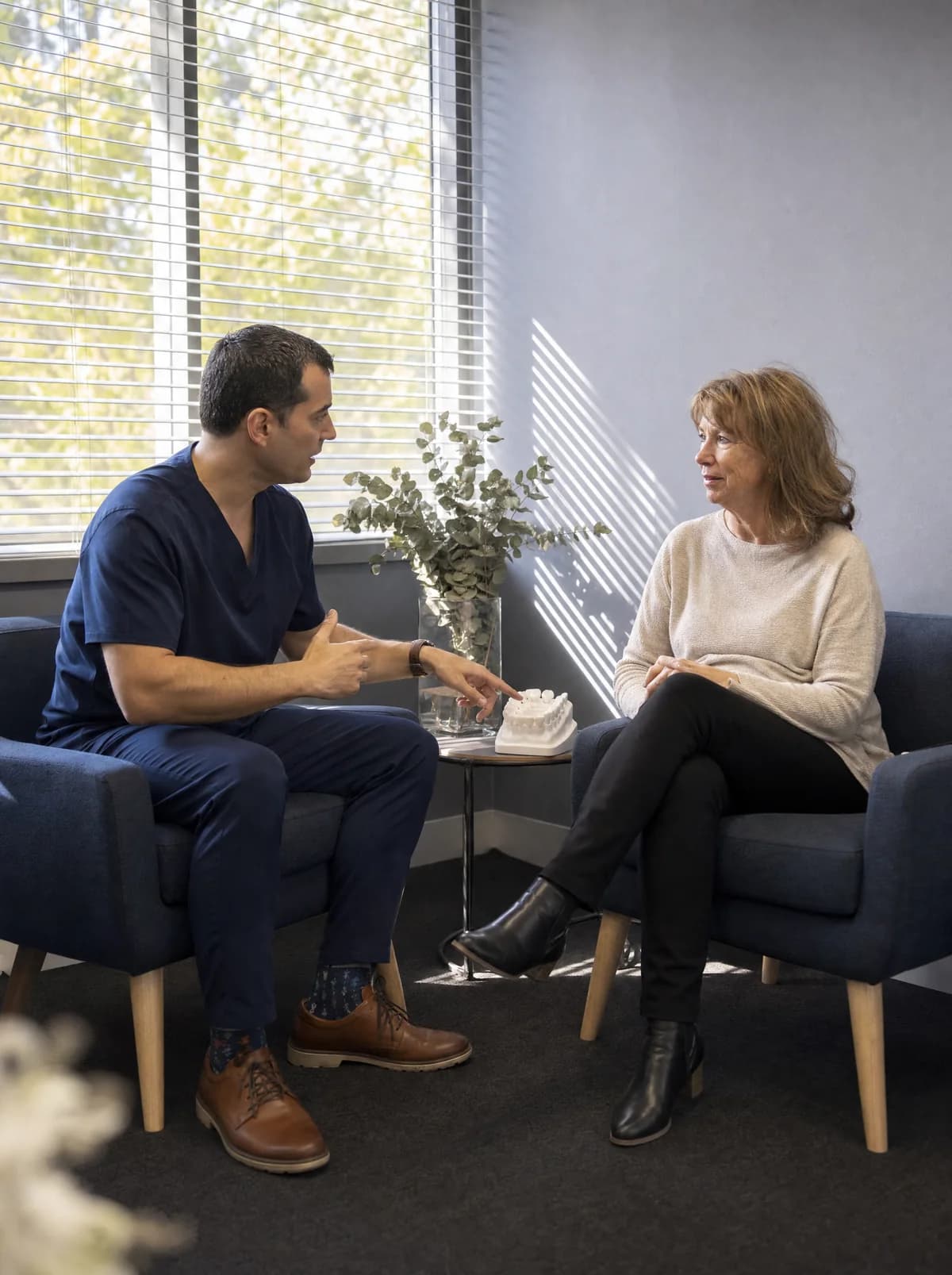
On this page
What does full arch implant treatment mean for you?
Full arch implant treatment replaces the teeth of one upper or lower jaw with a fixed implant bridge or a removable implant-retained denture (Healthdirect Australia; Leeds Teaching Hospitals NHS Trust). The denture comes out for cleaning; the fixed bridge stays attached. A plan for one jaw does not automatically include both.Sources: [1, 2, 3]
- Dental implants in West Perth
Compare the overall choices for replacing missing teeth.
A plan for one arch does not automatically include both jaws (Healthdirect Australia; Leeds Teaching Hospitals NHS Trust). A fixed bridge remains attached for daily use and cleaning. A removable implant-retained denture, also called an overdenture, is taken out for cleaning. Ask the dentist to name the proposed design rather than relying only on the phrase full arch.Sources: [2, 3]
Would your remaining teeth have to be removed?
No. Considering full arch implants does not mean all remaining teeth must be removed. Ask for an assessment of each tooth, the reasons for any proposed extraction and alternatives for retaining teeth before agreeing to replacement.
A tooth-supported bridge or partial denture may enter the discussion when suitable natural teeth remain (Healthdirect Australia). These approaches have their own requirements and maintenance needs. Whether they are workable is an assessment question, not something this guide can decide from the number of teeth you have.Sources: [4, 2]
- Single tooth implants
Read the decision guide for one missing tooth.
- Implant bridges
Read the decision guide for a smaller group of missing teeth.
What determines whether an implant-supported arch suits you?
Suitability depends on bone, gums, general health and your ability to manage surgery and ongoing care (Healthdirect Australia; Leeds Teaching Hospitals NHS Trust; Cambridge University Hospitals NHS Foundation Trust). Smoking, medicines and active dental disease need assessment. Some people require prior treatment or choose a conventional denture instead.Sources: [1, 3, 6, 2]
Your dentist needs to know about health conditions, medicines and previous gum disease, alongside the concerns that brought you to the appointment (Healthdirect Australia; Leeds Teaching Hospitals NHS Trust). Explain difficulty eating, problems with an existing denture and any limits on cleaning. Ask which findings affect surgery and which affect the replacement teeth and maintenance.Sources: [1, 3]
An assessment considers the bone and nearby structures using appropriate imaging (Healthdirect Australia; Leeds Teaching Hospitals NHS Trust). The number and positions of implants must come from that plan; this guide offers no preset count or branded protocol. Ask the clinician to explain the proposed support for your particular replacement.Sources: [1, 3]
If more bone is proposed through grafting, discuss the reason, alternatives and added risks (Cambridge University Hospitals NHS Foundation Trust). Grafting may require a separate procedure, can prolong treatment and may fail to provide enough bone. A full arch label does not mean grafting can be avoided.Sources: [7]
How do fixed bridges and removable arch replacements compare?
A fixed implant bridge stays attached for daily cleaning; an implant-retained denture comes out; a conventional full denture rests on the gums without implants (Healthdirect Australia; Leeds Teaching Hospitals NHS Trust). Compare surgery, cleaning access, adjustments and future repairs. Assess suitable remaining teeth before deciding the scope of replacement.Sources: [2, 3, 4]
The care difference is practical, not just a preference about removal (Healthdirect Australia; Leeds Teaching Hospitals NHS Trust). Before choosing fixed teeth, ask to see how you would reach under the proposed bridge. Before choosing an overdenture, ask how you would remove and replace it and clean the attachments. Tell the dentist if either task seems difficult.Sources: [4, 2, 3]
| Option | Support and removal | Existing teeth and jaw scope | Treatment commitment | Daily care and later work | Clinical guidance |
|---|---|---|---|---|---|
| Fixed implant bridgeSources: [1, 3, 8] | Implants support a bridge that you do not remove. | Ask which teeth can stay and whether the quote covers one jaw or both. | Implant surgery, healing and restorative stages. | Clean underneath and around supports; chips or looseness may need repair. | Healthdirect Australia; Leeds Teaching Hospitals NHS Trust; US Food and Drug Administration |
| Removable implant-retained dentureSources: [2, 3] | Implants retain a denture that you remove. | Clarify the assessed arch and any proposed extractions. | Implant stages plus denture fitting and adjustment. | Remove to clean; attachments and denture parts can wear. | Healthdirect Australia; Leeds Teaching Hospitals NHS Trust |
| Conventional full dentureSources: [2] | Rests on the gums and is removable. | Replaces the teeth of the specified upper or lower jaw. | Fitting and adaptation without implant placement. | Remove for cleaning; fit may need adjustment and review. | Healthdirect Australia |
| Retain suitable remaining teethSources: [4, 2] | Ask which teeth can be kept and how any gaps could be managed. | Assess teeth individually before setting the extent of replacement. | Treatment depends on the condition of those teeth. | Discuss care for retained teeth and any bridge or partial denture. | Healthdirect Australia |
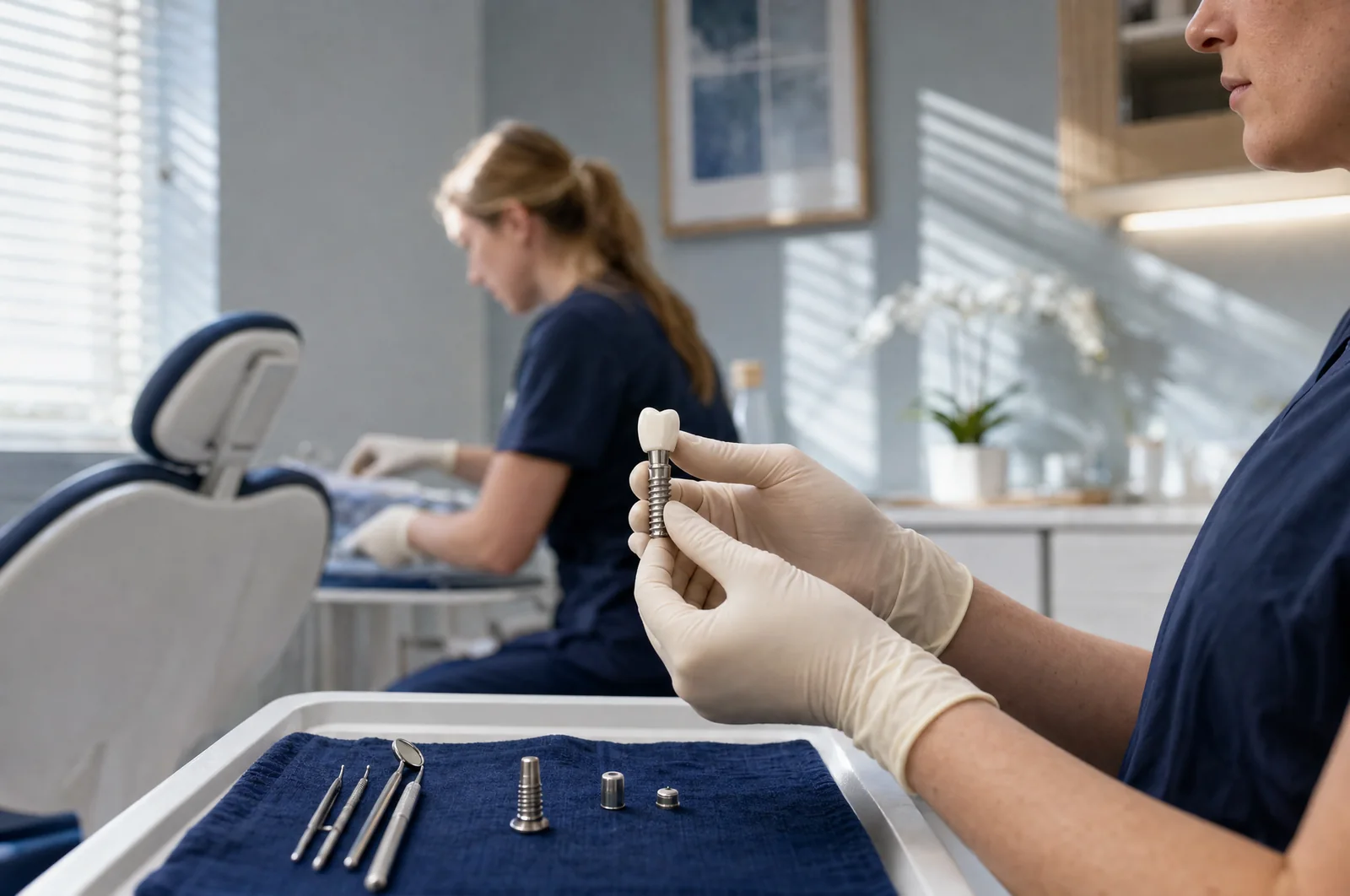
What stages should a full arch plan set out?
A full arch plan should cover remaining teeth, preparatory care, interim teeth, implant placement, healing and fitting the final bridge or denture (Healthdirect Australia; Leeds Teaching Hospitals NHS Trust; Cambridge University Hospitals NHS Foundation Trust). Ask what must be checked before each stage and how the plan would change if a support failed.Sources: [1, 3, 6]
Assessment and decision
Confirm the scope
Identify the jaw being treated, the teeth being retained or replaced, and the intended fixed or removable design (Healthdirect Australia; Leeds Teaching Hospitals NHS Trust). Compare suitable alternatives before choosing the plan.Sources: [4, 2, 3]
If needed before or with placement
Discuss preparatory care
Ask about treatment of existing disease and any proposed grafting (Cambridge University Hospitals NHS Foundation Trust). Each additional procedure needs an explanation of purpose, risks, recovery and effect on the sequence.Sources: [6, 7]
Before treatment starts
Agree interim teeth
Ask what you would wear during each stage and when it could be used (Leeds Teaching Hospitals NHS Trust; Cambridge University Hospitals NHS Foundation Trust). An existing denture may need adjustment and cannot always be worn immediately after surgery.Sources: [3, 6]
Surgical and healing stages
Place and review the implants
The implants are placed in the jaw and assessed as they heal (Healthdirect Australia; Cambridge University Hospitals NHS Foundation Trust). Bone integration takes time; unsuccessful integration can require removal and a revised plan.Sources: [1, 6]
Restorative stage
Make the arch replacement
Measurements and fitting appointments are needed for the planned bridge or denture (Leeds Teaching Hospitals NHS Trust; US Food and Drug Administration). Ask how appearance, fit, bite and cleaning access will be assessed before completion.Sources: [3, 8]
After fitting
Arrange ongoing maintenance
Confirm who will review the implants and replacement, which cleaning routine to use, and how repairs or adjustments would be arranged (Healthdirect Australia; Leeds Teaching Hospitals NHS Trust).Sources: [1, 3]
How will comfort and early recovery be managed?
Discuss the anaesthetic and pain-relief plan before surgery, and obtain aftercare instructions for your actual procedures (Healthdirect Australia; Leeds Teaching Hospitals NHS Trust; Cambridge University Hospitals NHS Foundation Trust). Implant placement commonly uses local anaesthetic; pain, swelling, bruising or bleeding can follow. Any extractions or grafting need their own recovery advice.Sources: [1, 3, 7]
Aftercare needs to be practical for your household (Healthdirect Australia). Ask which food textures are appropriate, what help you might need and how to care for the surgical areas. Discuss work and travel before agreeing to dates. The treating clinician sets your instructions; an example recovery story cannot establish your timetable.Sources: [1]
How is recovery different from having the final teeth fitted?
Early surgical recovery does not mean the implants are ready for the final teeth (Healthdirect Australia; Leeds Teaching Hospitals NHS Trust; Cambridge University Hospitals NHS Foundation Trust). Bone healing takes longer than gum healing, and the bridge or denture needs separate fitting appointments. Your clinician checks readiness before proceeding.Sources: [1, 3, 6]
Interim teeth may have different instructions from the final replacement (Cambridge University Hospitals NHS Foundation Trust; Healthdirect Australia). A removable denture may need a period out of the mouth or adjustment after surgery. Ask what you can wear at each stage, how to eat with it and whom to contact if it rubs or no longer fits.Sources: [6, 2]
New dentures can feel unfamiliar and may need adjustment as you adapt (Healthdirect Australia; Leeds Teaching Hospitals NHS Trust). Continued soreness or problems with fit need dental review. Those removable-denture issues should not be used as instructions for taking out or adjusting a fixed implant bridge yourself.Sources: [2, 3]
What daily care does each arch design need?
Clean underneath fixed bridges and around their implants in place; remove implant-retained dentures to clean both the denture and supporting areas (Healthdirect Australia; Leeds Teaching Hospitals NHS Trust). Both designs need daily care and professional review. Ask for a demonstration before choosing a design.Sources: [1, 4, 2, 3]
For a fixed bridge, ask which tools reach the space beneath it without damaging the surrounding tissue (Healthdirect Australia; US Food and Drug Administration). Joined teeth do not have the same floss access as separate natural teeth. Have the team watch your technique and discuss alternatives if the recommended approach is too difficult to manage.Sources: [4, 8]
For a removable denture, follow advice about removing it, cleaning every surface and looking after your mouth (Healthdirect Australia; Leeds Teaching Hospitals NHS Trust). Standard denture guidance recommends leaving dentures out at night; obtain instructions specific to your implant-retained design and surgical stage. Do not apply denture soaking or removal advice to a fixed bridge.Sources: [2, 3]
Professional maintenance also checks the gums, bone, fit and replacement parts (Leeds Teaching Hospitals NHS Trust; Cambridge University Hospitals NHS Foundation Trust). Implant-related gum inflammation and bone loss can occur, while a denture attachment or a bridge tooth can wear or break. Agree who will monitor these issues and how future repairs would be planned.Sources: [3, 6]
What are the risks and when should you seek help?
Full arch implants can involve infection, injury to nearby teeth, nerves or sinuses, failure to bond with bone, and later component problems (Healthdirect Australia; US Food and Drug Administration; Cambridge University Hospitals NHS Foundation Trust). A failed support can require further treatment or a revised replacement plan. Report implant pain or movement promptly.Sources: [1, 8, 6]
Implant failure can require further surgery or a different replacement (Cambridge University Hospitals NHS Foundation Trust; US Food and Drug Administration). Altered sensation and appearance problems, including visible metal, are also described in public guidance. Ask which risks apply to your anatomy and how any complication would be managed, including care while the final replacement is unavailable.Sources: [6, 8]
Get urgent dental or medical advice for suspected infection, including facial swelling with fever or a bad taste (Healthdirect Australia). Difficulty breathing or swallowing, severe mouth or tongue swelling, or substantial blood down the throat needs emergency care: call 000 or go straight to an emergency department.Sources: [9, 5]
- Urgent dental symptoms and hospital warning signs
Know when a problem needs prompt or emergency assessment.
- Dental abscess warning signs
Recognise infection symptoms and when to seek urgent help.
How should a full arch quote be broken down?
A full arch quote should identify one jaw or both, and a fixed or removable replacement. It should separate assessment, extractions or grafting if needed, implants, temporary teeth, the final replacement and ongoing care. Ask what is excluded and what could change the total.
Simply Smiles West Perth offers a no obligation consultation. Request an individual written estimate and ask when payments are due, what happens if the plan changes, and which reviews or repairs are charged separately. Check health fund benefits and payment-provider eligibility before deciding.
- Planning for fees and payment
Prepare questions about the scope and timing of a treatment estimate.
What does the evidence not decide about your arch?
General guidance cannot choose an arch design, set your implant count or predict your result (Healthdirect Australia; Leeds Teaching Hospitals NHS Trust; US Food and Drug Administration). Your assessment needs to address bone and gum health, suitable remaining teeth and your ability to maintain the proposed replacement.Sources: [1, 3, 8]
Could your existing denture be used with implants?
Sometimes an existing denture can be modified to attach to implants, but it needs assessment. Leeds Teaching Hospitals NHS Trust describes this as a possible option. Ask whether modification suits your denture and how it compares with making a new one.Sources: [3]
What is the next step in deciding about an arch replacement?
Book a no obligation consultation at Simply Smiles West Perth to compare full arch options. Bring your medicine list, any existing denture and questions about remaining teeth, cleaning and cost. Request a written comparison before agreeing to treatment.
- Review all implant replacement options
Return to the guide for the overall replacement decision.
- Contact Simply Smiles West Perth
Ask about assessment availability and who would provide it.
Sources
Numbers in brackets point to these public sources.
- Healthdirect Australia: Dental implant procedure. Reviewed February 2025. Accessed 6 October 2026.
- Healthdirect Australia: Dentures. Reviewed February 2025. Accessed 6 October 2026.
- Leeds Teaching Hospitals NHS Trust: Dental Implants. Reviewed 4 June 2025. Accessed 6 October 2026.
- Healthdirect Australia: Dental bridge. Reviewed February 2025. Accessed 6 October 2026.
- Healthdirect Australia: Dental injury. Reviewed February 2026. Accessed 6 October 2026.
- Cambridge University Hospitals NHS Foundation Trust: Dental implants in restorative dentistry. Approved 14 January 2025. Accessed 6 October 2026.
- Cambridge University Hospitals NHS Foundation Trust: Bone grafting for dental implants. Approved 15 July 2024. Accessed 6 October 2026.
- US Food and Drug Administration: Dental Implants: What You Should Know. Accessed 6 October 2026.
- Healthdirect Australia: Tooth abscess. Reviewed June 2025. Accessed 6 October 2026.
Clinical review
This guide was reviewed by the dentist named below. About our dentist
- Reviewing dentist
- Dr Michael Wu
- Qualifications
- Doctor of Dental Medicine (UWA)
- AHPRA registration
- DEN0002758483
- Review date
- 7 October 2026
Source access dates record when the research was checked. They are not clinical review dates.
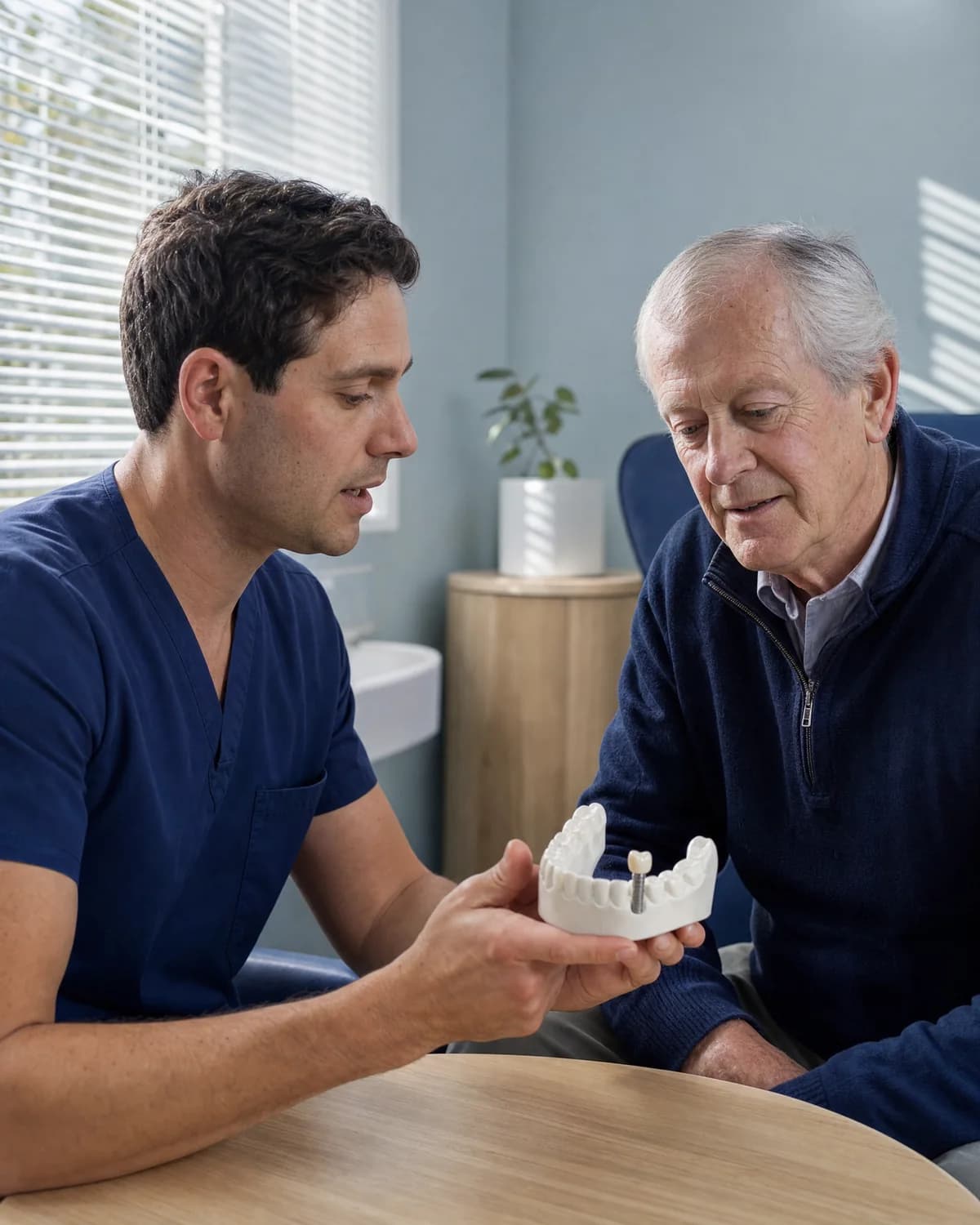
Talk through your options.
Arrange a no obligation consultation at Simply Smiles West Perth to compare full arch options and request an individual written plan.
Any surgical or invasive procedure carries risks. Before going ahead, you may wish to seek a second opinion from an appropriately qualified health practitioner.