
Single Tooth Implants Perth
A single tooth implant supports a crown to replace one missing tooth, as Healthdirect Australia explains. Compare surgery, healing and daily care with a bridge or removable denture before deciding.
Implant treatment at this clinic: Single-tooth implants, implant bridges and full-arch implants offered; suitability assessed individually
On this page
What does a single tooth implant replace?
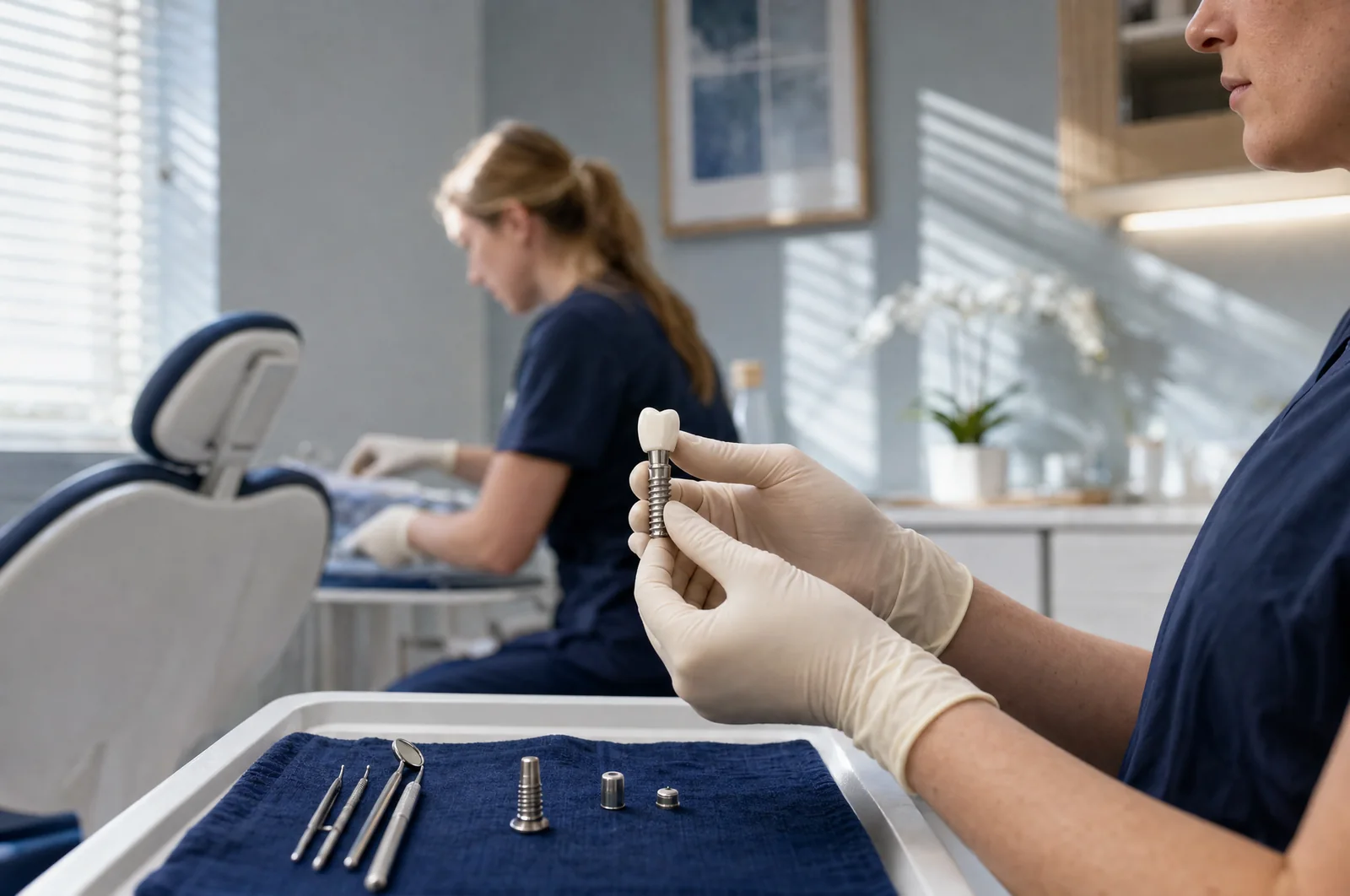
A single tooth implant replaces one missing tooth with a crown supported by an implant in the jawbone (Healthdirect Australia). The implant replaces the root; the crown is the visible tooth. Assessment considers the gap, adjacent teeth, bone and your health.Sources: [1]
- Dental implants in West Perth
Start with the wider comparison of tooth-replacement choices.
The implant, connector and crown are distinct parts (US Food and Drug Administration). The connector, called an abutment, joins the implant to the replacement tooth. Asking which parts are included helps you understand both the treatment plan and later repair discussions; the visible crown is not the entire implant system.Sources: [2]
Who might consider an implant for one tooth?
A single tooth implant may suit someone with one missing tooth, sufficient bone, healthy supporting tissues and the ability to manage surgery and daily care (Healthdirect Australia; Cambridge University Hospitals NHS Foundation Trust). Your health and medicines also need assessment; untreated decay, infection or gum disease may need care first.Sources: [1, 3]
Your dentist should examine the whole mouth, not only the empty space (Healthdirect Australia; US Food and Drug Administration; Leeds Teaching Hospitals NHS Trust). Smoking, gum disease and some health conditions or medicines can affect healing and later implant health. Explain your medical history accurately, including treatment outside dentistry, so those factors can be considered in your individual plan.Sources: [1, 2, 4]
A single implant avoids using neighbouring teeth as supports for a bridge (Leeds Teaching Hospitals NHS Trust). That difference can matter when the adjacent teeth are intact, but it does not settle the decision on its own. Your willingness to have surgery, attend staged appointments and keep the implant clean matters too.Sources: [4]
A tooth that is still present needs its own assessment before replacement is discussed (Healthdirect Australia). Ask whether it can be retained and what treatment that would involve. Do not treat a discussion about implants as a decision that extraction is necessary.Sources: [5, 6]
What should your assessment explain about the gap and bone?
Examination and imaging assess the gap, available bone and nearby structures before single-implant treatment (Healthdirect Australia; Leeds Teaching Hospitals NHS Trust; Cambridge University Hospitals NHS Foundation Trust). If more bone is needed, discuss the purpose, risks and timing of grafting separately. Ask how the findings affect the proposed crown position.Sources: [1, 4, 7]
Bone grafting means adding material to increase bone at the intended implant site (Cambridge University Hospitals NHS Foundation Trust). Some grafts can accompany placement; others require a separate stage and more healing. A graft can fail or leave insufficient bone, so it cannot be presented as a certain route to an implant.Sources: [7]
For a tooth visible in your smile, ask how the planned crown and gum outline would look together (Cambridge University Hospitals NHS Foundation Trust). The published guidance identifies appearance problems, including visible metal, as possible complications. A dentist can explain limitations related to your anatomy, but a guide cannot predict a match or result.Sources: [3]
What are the stages between assessment and your final crown?
Single tooth implant treatment involves preparation, implant placement, bone healing and making and fitting the crown (Healthdirect Australia; Leeds Teaching Hospitals NHS Trust). Bone must bond to the implant before the planned restoration is used. Ask for review points and arrangements for the gap during healing.Sources: [1, 4]
Before surgery
Agree the tooth-replacement plan
Compare the implant with other suitable options (Healthdirect Australia; Cambridge University Hospitals NHS Foundation Trust). Confirm the intended crown, preparatory care, risks, temporary-tooth discussion and itemised estimate before choosing treatment.Sources: [1, 3]
If assessment identifies a need
Complete necessary preparation
Active dental disease needs attention (Cambridge University Hospitals NHS Foundation Trust). Where grafting is proposed, ask whether it is a separate stage and what must heal before implant placement.Sources: [3, 7]
Surgical stage
Place the implant
The clinician places the implant in the jawbone (Healthdirect Australia; Leeds Teaching Hospitals NHS Trust). Depending on the plan, a later small procedure may be needed to uncover its top.Sources: [1, 4]
During bone healing
Review integration
Integration means the implant joining to the bone (US Food and Drug Administration; Leeds Teaching Hospitals NHS Trust). Healing can take months or longer. The clinician assesses readiness; less soreness alone does not prove integration.Sources: [2, 4]
Restorative stage
Make the crown
Impressions or other measurements guide the replacement tooth (Leeds Teaching Hospitals NHS Trust; US Food and Drug Administration). Ask how its fit, appearance and bite will be checked before the final stage is agreed.Sources: [4, 2]
After fitting
Set the care plan
Confirm the cleaning method, review arrangements and contact for problems (Healthdirect Australia; US Food and Drug Administration). Keep the implant system details for your own records.Sources: [1, 2]
What discomfort could single-implant treatment involve?
Local anaesthetic commonly numbs the area for surgery; pain, swelling, bruising or bleeding can follow a single implant procedure (Healthdirect Australia). Discuss anxiety, previous anaesthetic problems and medicines before treatment, and ask for individual pain-relief and aftercare instructions.Sources: [1]
Your appointment discussion should include what happens if you need a pause and how you can tell the team you are uncomfortable. Ask which instructions apply before leaving and whom to contact afterwards.
How will you know when healing is ready for the next stage?
Your clinician checks bone healing before proceeding with the planned crown (Healthdirect Australia; Leeds Teaching Hospitals NHS Trust). The surgical site may feel comfortable before the implant is ready for use. Follow the advised food and cleaning routine until your clinician changes it.Sources: [1, 4]
Aftercare may include softer food and a temporary change to cleaning around the surgical site (Healthdirect Australia). The exact instructions depend on your procedure. Ask what you should clean normally, what needs special care and when the plan will be reviewed; do not extend a short-term instruction indefinitely.Sources: [1]
Temporary teeth need their own instructions (Leeds Teaching Hospitals NHS Trust; Cambridge University Hospitals NHS Foundation Trust). Ask whether you will have a removable replacement, when it can be worn and whether adjustment may be needed after surgery. A temporary option should be agreed in advance, not assumed from the fact that a final crown is planned.Sources: [4, 3]
What risks and warning signs should you discuss?
Single implants can fail to bond with bone, become infected or injure nearby teeth, nerves or sinuses during placement (Healthdirect Australia; US Food and Drug Administration; Cambridge University Hospitals NHS Foundation Trust). A connector can also loosen. Tell your dentist promptly about implant pain or movement; examination is needed to identify the cause.Sources: [1, 2, 3]
Nerve injury can cause altered sensation, and implants near the upper jaw can involve sinus risks (Healthdirect Australia; Cambridge University Hospitals NHS Foundation Trust). Ask how the proposed position affects your risk and what to do if sensation does not return as expected. Failed integration may require implant removal and a different replacement plan.Sources: [1, 3]
Seek urgent dental or medical assessment for suspected infection, including swelling with fever or a bad taste (Healthdirect Australia). Call 000 or go straight to an emergency department if you have trouble breathing or swallowing, marked mouth or tongue swelling, or substantial blood running down your throat.Sources: [8, 5]
- When a dental problem needs urgent care
Check the distinction between dental assessment and hospital help.
- Dental abscess warning signs
Recognise infection symptoms and when to seek urgent help.
How do you clean and maintain a single implant?
After healing, clean around the implant crown and gums, clean between it and neighbouring teeth, and attend regular dental checks (Healthdirect Australia). Ask your dental team to demonstrate the suitable tools and confirm a review plan for both implant and crown.Sources: [1]
Implant maintenance has two different concerns: the health of the surrounding tissue and the condition of the replacement parts (Leeds Teaching Hospitals NHS Trust; US Food and Drug Administration). Gum inflammation can progress to bone loss around an implant. Crowns may chip or come off, and a screw or other attachment may loosen or need attention.Sources: [4, 2]
How does one implant compare with a bridge or partial denture?
A single implant crown uses jawbone support; a conventional bridge uses prepared neighbouring teeth; a partial denture comes out for cleaning (Healthdirect Australia; Leeds Teaching Hospitals NHS Trust). Surgery, effects on adjacent teeth and daily care differ. Leaving a gap under review may be reasonable after assessment of function and appearance.Sources: [1, 6, 9, 4]
| Option | Support and neighbouring teeth | Treatment and suitability | Daily care and repairs | Clinical guidance |
|---|---|---|---|---|
| Single implant crownSources: [1, 4, 2] | Implant in jawbone; nearby teeth do not support the crown. | Bone, health and gums assessed; surgery and healing. | Clean around the implant; crown or connector may need repair. | Healthdirect Australia; Leeds Teaching Hospitals NHS Trust; US Food and Drug Administration |
| Tooth-supported bridgeSources: [6] | Natural teeth; conventional designs usually require preparation. | Check the strength and health of supporting teeth. | Clean underneath; supporting-tooth decay or cement failure can affect the bridge. | Healthdirect Australia |
| Removable partial dentureSources: [9] | A removable tooth replacement fitted around remaining teeth. | Fit and adaptation need assessment; no implant surgery for a conventional denture. | Take out to clean; adjustments may be needed. | Healthdirect Australia |
- Implant bridges
Questions about several adjacent missing teeth.
- Full arch implants
Questions about replacement across a whole jaw.
What would the full fee for one implant include?
A single-tooth estimate should identify the implant, connector and crown, plus assessment, imaging, preparation, surgery, temporary teeth and reviews. Ask which items and future repairs are included so you can compare the whole plan rather than placement alone.
Simply Smiles West Perth offers a no obligation consultation. Request an individual written estimate and ask when payments are due, what happens if the plan changes, and which reviews or repairs are charged separately. Check health fund benefits and payment-provider eligibility before deciding.
- Understanding fees and payment options
Prepare the financial questions for your written estimate.
What can published guidance not predict for your tooth?
Public guidance cannot predict suitability, appearance, healing time or lifespan for your particular implant crown (Healthdirect Australia; US Food and Drug Administration; Cambridge University Hospitals NHS Foundation Trust). Your dentist needs to connect the examination findings to your risks, alternatives and priorities.Sources: [1, 2, 3]
Can you ask about the materials before deciding?
Yes. Ask about the proposed implant, connector and crown materials before deciding. The US Food and Drug Administration also recommends asking for the implant brand and model and keeping those details if you proceed.Sources: [2]
What if you move or change dentists during treatment?
Before moving or changing dentists, agree who will finish the treatment and provide ongoing care. Keep a summary of completed and outstanding stages. The US Food and Drug Administration recommends regular dental visits and keeping the implant brand and model for your records.Sources: [2]
How can you take the next step without committing to an implant?
Book a no obligation consultation at Simply Smiles West Perth to discuss a single missing tooth. Bring your medicine list and questions about retaining teeth, alternatives, stages and costs. Request a written plan before deciding on treatment.
- Review the dental implant options
Return to the replacement-choice guide.
- Contact Simply Smiles West Perth
Check assessment availability and what information to bring.
Sources
Numbers in brackets point to these public sources.
- Healthdirect Australia: Dental implant procedure. Reviewed February 2025. Accessed 6 October 2026.
- US Food and Drug Administration: Dental Implants: What You Should Know. Accessed 6 October 2026.
- Cambridge University Hospitals NHS Foundation Trust: Dental implants in restorative dentistry. Approved 14 January 2025. Accessed 6 October 2026.
- Leeds Teaching Hospitals NHS Trust: Dental Implants. Reviewed 4 June 2025. Accessed 6 October 2026.
- Healthdirect Australia: Dental injury. Reviewed February 2026. Accessed 6 October 2026.
- Healthdirect Australia: Dental bridge. Reviewed February 2025. Accessed 6 October 2026.
- Cambridge University Hospitals NHS Foundation Trust: Bone grafting for dental implants. Approved 15 July 2024. Accessed 6 October 2026.
- Healthdirect Australia: Tooth abscess. Reviewed June 2025. Accessed 6 October 2026.
- Healthdirect Australia: Dentures. Reviewed February 2025. Accessed 6 October 2026.
Clinical review
This guide was reviewed by the dentist named below. About our dentist
- Reviewing dentist
- Dr Michael Wu
- Qualifications
- Doctor of Dental Medicine (UWA)
- AHPRA registration
- DEN0002758483
- Review date
- 7 October 2026
Source access dates record when the research was checked. They are not clinical review dates.
Talk through your options.
Arrange a no obligation consultation at Simply Smiles West Perth to discuss single tooth implants, alternatives and a written estimate.
Any surgical or invasive procedure carries risks. Before going ahead, you may wish to seek a second opinion from an appropriately qualified health practitioner.