
Dental Implants West Perth
Dental implants support replacement teeth from the jawbone, as Healthdirect Australia explains. Simply Smiles West Perth offers single-tooth implants, implant bridges and full-arch implants; suitability needs an individual assessment.
Implant treatment at this clinic: Single-tooth implants, implant bridges and full-arch implants offered; suitability assessed individually
On this page
What could replace your missing teeth?
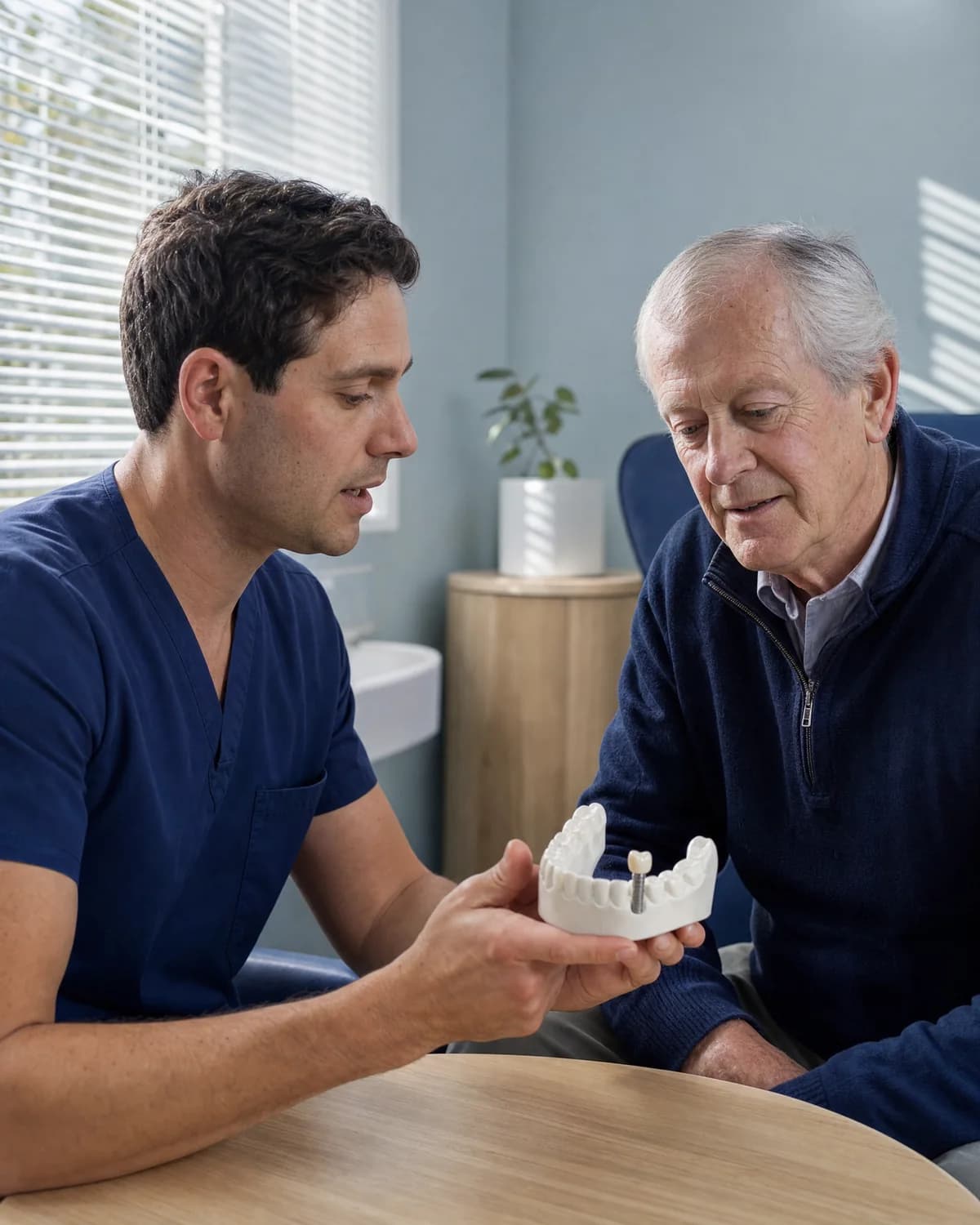
Dental implants, tooth-supported bridges and removable dentures can replace missing teeth (Healthdirect Australia). Implants sit in the jawbone and support a crown, bridge or denture. Choose a guide below for one tooth, several teeth or a whole upper or lower jaw.Sources: [1, 2, 3]
- Single tooth implants
Explore the decision about one missing tooth.
- Implant bridges
Explore the decision about several adjacent missing teeth.
- Full arch implants
Explore the decision about an upper or lower arch.
An implant is the support below the visible tooth, not the whole replacement (Healthdirect Australia; Leeds Teaching Hospitals NHS Trust). A crown replaces one tooth; a bridge joins replacement teeth together. For a whole upper or lower jaw, fixed and removable designs need separate discussion. Start with the guide that matches the gap you want assessed.Sources: [1, 4]
Could implants suit you, or should other care come first?
Implants may suit you if your bone, gums and general health can support surgery and ongoing care (Healthdirect Australia; Cambridge University Hospitals NHS Foundation Trust; Leeds Teaching Hospitals NHS Trust). A dentist checks remaining teeth, medicines and smoking; active decay, infection or gum disease may need treatment first. Surgery or maintenance may make another replacement more suitable.Sources: [1, 5, 4]
Your assessment should connect those findings to a choice you can understand (Healthdirect Australia; Leeds Teaching Hospitals NHS Trust). Bring a medicine list and explain previous dental problems, health conditions and what you find difficult about eating or cleaning. Tell the dentist if committing to several visits or ongoing care would be difficult.Sources: [1, 4]
Bone grafting may be discussed when support is insufficient (Cambridge University Hospitals NHS Foundation Trust). A graft aims to increase bone, but it adds its own procedure and risks and can extend treatment. Ask whether a non-implant option would meet your needs before agreeing to extra surgery.Sources: [6]
What happens between assessment and the finished teeth?
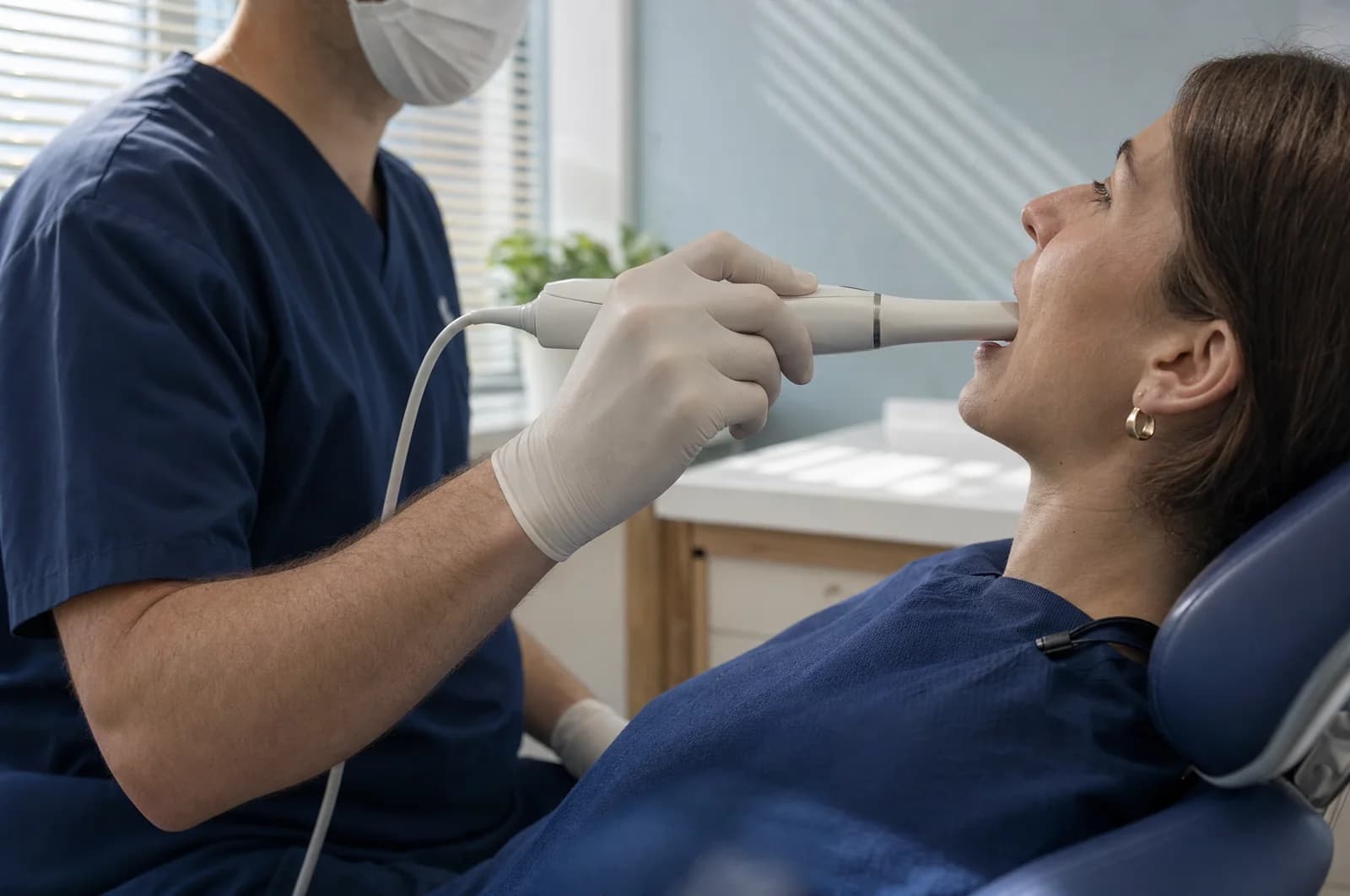
Implant treatment involves assessment, planning, surgery, bone healing and fitting the replacement teeth (Healthdirect Australia; US Food and Drug Administration; Leeds Teaching Hospitals NHS Trust). Healing can take months. Your clinician checks readiness before the next stage; ask for a plan that also covers temporary teeth and possible delays.Sources: [1, 7, 4]
Understand the starting point
Examination and imaging help assess the supporting bone and surrounding structures (Healthdirect Australia; Leeds Teaching Hospitals NHS Trust). Ask which findings affect your choices.Sources: [1, 4]
Agree the whole plan
Compare alternatives, any preparatory care, the intended teeth and a written estimate before deciding about surgery (Healthdirect Australia; Cambridge University Hospitals NHS Foundation Trust).Sources: [1, 5]
Place the implants
Surgery positions the supports in your jawbone (Healthdirect Australia). The treating clinician explains the anaesthetic and procedure proposed for you.Sources: [1]
Check healing
The bone needs time to join to the implants (Leeds Teaching Hospitals NHS Trust; Cambridge University Hospitals NHS Foundation Trust). Further treatment or a changed plan may be needed if healing is unsuccessful.Sources: [4, 5]
Make and fit the teeth
The restorative stage makes the crown, bridge or denture (Leeds Teaching Hospitals NHS Trust; Cambridge University Hospitals NHS Foundation Trust). This involves separate appointments and checks of the planned replacement.Sources: [4, 5]
Continue review
Professional checks and cleaning remain part of care after the teeth are fitted (Healthdirect Australia; US Food and Drug Administration). Ask who will provide your ongoing maintenance.Sources: [1, 7]
How might treatment feel, and what does recovery involve?
Local anaesthetic commonly numbs the area during implant surgery; pain, swelling, bruising or bleeding can follow (Healthdirect Australia; Leeds Teaching Hospitals NHS Trust). Early recovery and bone healing are separate stages. Obtain instructions for eating, cleaning, pain relief and when to contact your clinician.Sources: [1, 4]
How do implants compare with a bridge or removable denture?
Implants use jawbone support, conventional bridges use neighbouring teeth, and partial dentures are removable (Healthdirect Australia; Leeds Teaching Hospitals NHS Trust). Implant treatment requires surgery; a conventional bridge usually requires preparation of nearby teeth. Compare daily care and later repairs as well as the initial treatment.Sources: [1, 2, 3, 4]
A replacement decision can also include leaving a space under review when its effect on appearance and function is limited (Leeds Teaching Hospitals NHS Trust). That is a discussion after assessment, not advice to ignore a painful or diseased tooth.Sources: [4]
| Option | Support and effect on nearby teeth | Treatment commitment | Daily care and later work | Clinical guidance |
|---|---|---|---|---|
| Implant-supported teethSources: [4, 7] | Implants in bone; neighbouring teeth do not provide the bridge support. | Surgery, healing and restorative visits. | Clean around supports; teeth or components may need repair. | Leeds Teaching Hospitals NHS Trust; US Food and Drug Administration |
| Tooth-supported bridgeSources: [2] | Natural teeth beside the gap; conventional designs usually need tooth preparation. | Supporting teeth need assessment and treatment where necessary. | Clean beneath the bridge; decay or cement failure can affect it. | Healthdirect Australia |
| Removable partial dentureSources: [3] | A removable replacement for some teeth; design uses the remaining mouth structures. | Fitting and possible adjustment; no implant placement for a conventional denture. | Remove for cleaning; review the mouth and denture fit. | Healthdirect Australia |
What care will implants and replacement teeth need?
Implants need daily cleaning and regular dental checks (Healthdirect Australia; Leeds Teaching Hospitals NHS Trust). Fixed bridges stay in your mouth for cleaning underneath and around the supports; removable implant-retained dentures come out. Ask for a demonstration suited to your design and ability to reach each area.Sources: [1, 3, 4]
Implant care includes checking the surrounding gums and bone as well as the visible teeth (Leeds Teaching Hospitals NHS Trust; Cambridge University Hospitals NHS Foundation Trust). Gum inflammation and later bone loss can threaten an implant. A chipped bridge, worn denture attachment or loose part may need separate repair even when the underlying implant remains usable.Sources: [4, 5]
What should a complete implant quote explain?
A complete implant quote should list assessment, imaging, preparatory care, surgery, temporary teeth, the final replacement and ongoing maintenance. Ask which items are included, excluded or dependent on findings, and what happens to the cost if the plan changes.
Simply Smiles West Perth offers a no obligation consultation. Request an individual written estimate and ask when payments are due, what happens if the plan changes, and which reviews or repairs are charged separately. Check health fund benefits and payment-provider eligibility before deciding.
- Fees and payment options
Check the information needed before accepting a treatment estimate.
What problems need dental advice or urgent help?
Infection, injury to nearby teeth, nerves or sinuses, and failure to bond with bone are possible implant complications (Healthdirect Australia; US Food and Drug Administration; Cambridge University Hospitals NHS Foundation Trust). Later gum inflammation, bone loss or loose components can need treatment. Tell your treating dentist promptly about implant pain or movement.Sources: [1, 7, 5]
Nerve injury can affect sensation; implant failure may require removal or further surgery (Healthdirect Australia; US Food and Drug Administration; Cambridge University Hospitals NHS Foundation Trust). Ask which risks matter at the proposed position and what the fallback plan would be. A published description cannot give your personal likelihood of a complication.Sources: [1, 7, 5]
Call 000 or go straight to an emergency department for difficulty breathing or swallowing, marked swelling of the mouth or tongue, or a lot of blood running down your throat (Healthdirect Australia). These signs need emergency care rather than a routine dental enquiry.Sources: [8]
- Emergency dental guidance
Read about urgent dental problems and when to seek hospital care.
- Dental abscess warning signs
Recognise infection symptoms and when to seek urgent help.
What can this research tell you about your own result?
Public guidance explains implant options and risks; it cannot determine your suitability, implant count, completion date or personal lifespan of the replacement (Healthdirect Australia; US Food and Drug Administration; Leeds Teaching Hospitals NHS Trust). Those questions need an examination and an individual plan.Sources: [1, 7, 4]
Could you have teeth to wear during healing?
A temporary replacement may be possible during healing, but its design and timing need individual planning (Leeds Teaching Hospitals NHS Trust; Cambridge University Hospitals NHS Foundation Trust). A removable denture may need adjustment or a period out of the mouth after surgery. Ask what you will wear at each stage before treatment starts.Sources: [4, 5]
What information should you keep after implant treatment?
Keep the implant system's brand and model with your treatment plan and care instructions. The US Food and Drug Administration recommends keeping these device details for future discussions with a dental provider.Sources: [7]
What is the next step if you want to compare options?
Arrange a no obligation consultation at Simply Smiles West Perth to compare implant options. Bring your medicine list and questions about surgery, cleaning, alternatives and total cost. Request a written plan before deciding.
- Contact Simply Smiles West Perth
Ask about assessment availability and the information to bring.
Sources
Numbers in brackets point to these public sources.
- Healthdirect Australia: Dental implant procedure. Reviewed February 2025. Accessed 6 October 2026.
- Healthdirect Australia: Dental bridge. Reviewed February 2025. Accessed 6 October 2026.
- Healthdirect Australia: Dentures. Reviewed February 2025. Accessed 6 October 2026.
- Leeds Teaching Hospitals NHS Trust: Dental Implants. Reviewed 4 June 2025. Accessed 6 October 2026.
- Cambridge University Hospitals NHS Foundation Trust: Dental implants in restorative dentistry. Approved 14 January 2025. Accessed 6 October 2026.
- Cambridge University Hospitals NHS Foundation Trust: Bone grafting for dental implants. Approved 15 July 2024. Accessed 6 October 2026.
- US Food and Drug Administration: Dental Implants: What You Should Know. Accessed 6 October 2026.
- Healthdirect Australia: Dental injury. Reviewed February 2026. Accessed 6 October 2026.
Clinical review
This guide was reviewed by the dentist named below. About our dentist
- Reviewing dentist
- Dr Michael Wu
- Qualifications
- Doctor of Dental Medicine (UWA)
- AHPRA registration
- DEN0002758483
- Review date
- 7 October 2026
Source access dates record when the research was checked. They are not clinical review dates.
Find out which option suits you.
Contact Simply Smiles West Perth to arrange a no obligation consultation about your implant options.
Any surgical or invasive procedure carries risks. Before going ahead, you may wish to seek a second opinion from an appropriately qualified health practitioner.